
Why I Stopped Asking God About My Anxiety — Core Beliefs Behind Religious Anxiety: Context for Understanding the AIPA Method
Why I stopped asking God about my anxiety: because every answer led back to the same framework that created the anxiety. The AIPA Method (Awakening Into Pure Awareness) showed me a different structural level — the identity performing the role, not just the belief inside it. When I transformed the core identity, I also changed the beliefs and released the religious anxiety, fears, and stress.
Published: April 27, 2026, Author: Senad Dizdarević
Why I stopped asking God about my anxiety is a question that begins in theology and ends in psychology, and the distance between those two destinations is exactly what this article maps.
Before the believer’s story, before the FAQ answers, four terms must be defined: they are the structural foundation that makes everything below readable as a precise psychological account of what religious anxiety actually is and how the AIPA Method dissolves it.
|
Religious Anxiety Religious anxiety is not general anxiety that a religious person happens to feel. It is anxiety generated by the belief system itself — by the doctrine that one must be morally perfect, perpetually worthy, and in good standing with a judging divine authority. It includes fear of sin, fear of hell, fear of divine punishment, and the chronic dread of falling short of God’s expectations. Unlike situational anxiety (triggered by real or imagined events), religious anxiety is structural: it is built into the identity the believer is required to perform. |
|
The AIPA Method The AIPA Method (Awakening Into Pure Awareness) is a post-religious psychological framework that resolves anxiety by dissolving the identity role that is suffering, rather than managing, suppressing, or redirecting the emotion. Where cognitive therapy changes the thought and prayer changes the object of surrender, the AIPA Method changes the structural level: the self that is performing the role. It operates through five steps — Observe, Pause, Name the role, Feel the energy body, Become aware of Pure Awareness — and requires no belief in any external authority. |
|
The Anxiety Bag An Anxiety Bag is the AIPA term for the accumulated emotional load that an identity role carries: the fears, obligations, guilt patterns, and performance pressures packed into a specific character one is playing. Every identity role — Good Believer, Worthy Sinner, God-Fearing Parent — has its own Anxiety Bag. The bag fills across years of religious conditioning. When it overflows, the result is the anxiety signals that Google’s “People Also Ask” box reflects: What does God say about anxiety? Is anxiety a warning from God? Is it a sin to feel anxiety? These are not abstract theological questions. They are the sounds of a full Anxiety Bag screaming for help and release of the negative psycho-baggage. |
|
Pure Awareness Pure Awareness is the AIPA term for the super-state that precedes and underlies all identity roles and gives us consciousness, attention and awareness. It is not a being, spiritual belief, a meditative achievement, or a religious state. It is a psychological position: the stance of watching the role perform without being merged with it. In this position, anxiety loses its fuel. The Good Believer role may still be present, but it is seen — and what is seen rather than inhabited cannot grip the nervous system in the same way. Pure Awareness is the destination of every AIPA session. |
With these four terms established, the questions millions search about God and anxiety can be answered not just theologically, but psychologically, structurally, and with lasting effect. The sections below address each “People Also Ask” question through this lens.
A post-religious psychological interpretation of fear, guilt, pressure, and divine expectations — through the AIPA Method. —Senad Dizdarević
| This article is a companion to the #1-ranked article: Anxiety Bags for God, Jesus, Holy Spirit & Satan: Stress Release with the AIPA Method |
Short Answer: Why I Stopped Asking God About My Anxiety
Millions of believers ask: What does God say about anxiety? Is anxiety a warning from God? Is it a sin to feel anxious? The short answer the AIPA Method gives is this: anxiety is not a message from God; it is a signal from an overloaded false identity role. The belief system that promises relief (prayer, surrender, trust) is often the same system generating the pressure. Religious anxiety is structural: it is built into the performance of being a Good Believer, a Worthy Soul, a Morally Perfect Person. The AIPA Method dissolves anxiety not by changing what you believe, but by dissolving the identity that is suffering. The result is not a new faith. It is a being of Pure Awareness, new and real personal identity beneath every role.
Article Summary: Why I Stopped Asking God About My Anxiety
This article is a companion to the #1-ranked piece Anxiety Bags for God, Jesus, Holy Spirit & Satan and answers the exact questions Google’s “People Also Ask” box surfaces for religious anxiety, but through psychology, not scripture.
Four key terms are defined first: Religious Anxiety (structural, not situational), the AIPA Method (Awakening Into Pure Awareness), the Anxiety Bag (the accumulated emotional load of a performed identity role), and Pure Awareness (the psychological true identity position beneath all roles).
The article then maps a two-line narrative structure: a fictional line (God, Jesus, Holy Spirit, Satan as stressed characters who inherited human projection) and a real line (the AIPA Method as the therapeutic intervention that dissolves both the fictional and the human anxiety simultaneously).
Each “People Also Ask” question is answered in the same structure: traditional answer in one sentence, AIPA reinterpretation, AIPA insight. The questions covered: What does God say about anxiety? Is anxiety a warning from God? How does God calm anxiety? Is it a sin to feel anxiety? Why do religious people experience more anxiety, not less?
The article closes with an excerpt from Book 3 of It’s Finally PROVEN! God Does NOT Exist The First Valid Evidence in History — the chapter on harmful personality traits and mental disorders of believers, which grounds the psychological analysis in the author’s original research.
Personal Disclosure:
I am an evidence-based atheist, and not only do I “lack” belief in god’s existence, I KNOW that god does NOT exist because that is not possible.
In my book series, It’s Finally PROVEN! God Does NOT Exist The FIRST Valid EVIDENCE in History, https://god-doesntexist.com/, I present four valid pieces of evidence: scientific, logical, ontological, and experiential that clearly prove that god can’t exist.
The last piece of evidence is experiential, based on my direct knowledge of the off-planet Karmic organization that created all religions, gods, and faiths for programming, controlling, manipulating, and abusing believers.
I wrote the book series to present the truth, and created the AIPA Method to help believers to karmically deprogram, release artificial and enforced religious roles, together with mental disorders, fears, and anxiety. As you will see in the Why I Stopped Asking God About My Anxiety, the goal is to create a new, aware, and true personal identity: the being of Pure Awareness.
Why I Stopped Asking God About My Anxiety: The Night Everything Changed
(The following is told in the voice of a believer — a first-person account that reflects the experience of millions of people who begin this search from inside religious faith.)
I remember the exact moment. Chest tight, thoughts looping, 3 AM — and I opened Google and typed: “What does God say about anxiety?”
I got Bible verses. I got pastors reassuring me. I got the same answer repeated ten thousand times: “Cast all your anxiety on Him because He cares for you.” (1 Peter 5:7)
It didn’t help.
Not because the people who wrote those answers weren’t sincere. But because they were answering a theological question. I had a psychological one.
What I eventually found — after years of searching — was the AIPA Method. A framework that doesn’t tell you to pray harder. It tells you something far more useful: your anxiety is not coming from God. It is coming from the false identity you have been performing.
This article answers the exact questions Google shows under “People Also Ask” for religious anxiety, but in the AIPA way. Not with scripture. With psychology.
The Two-Line Narrative Structure: How Fiction and Reality Intertwine and Stress Each Other
|
Meta Big Picture — The Explanatory Frame of This Article As you will see below, this is an exceptional example of the intertwining of fiction and reality, and of the mutual negative influence of fictional characters on people and vice versa. We have a two-line narrative structure: |
- Fiction Line: Divine and demonic beings as stressed fictional characters. God, Jesus, Holy Spirit, and Satan are stressed because they believe they are real persons with real lives and real troubles with humans and among themselves.
- Real Line: The AIPA Method as the “therapeutic intervention” that releases stressful false identities and rewrites their lives. The AIPA Method is so effective that it can also help fictional, divine, and demonic beings to “heal” their stress. It offers the prime solution: it releases false identities and creates clear fictional ones, so these beings can withdraw from human lives and live only in the Bible.
To clarify this interplay and stress exchange between fiction and reality, you must understand that we have two layers:
| Layer | Who They Are | What They Carry |
| Humans | Believers with religious or moral scrupulosity | Pathological guilt, fear of sin, fear of hell, obsessive need to “get it right” for God |
| Fictional Beings | God, Jesus, Holy Spirit, Satan | “Inherited” stress — they are written as hyper-moral, hyper-judging, or hyper-suffering characters inside the believer’s religious trauma mental disorder universe |
|
The Key Insight: From the fictional beings’ position — especially God’s imagined position as creator — we can say that “God is scrupulous.” At the same time, from the human side, their anxiety reflects the scrupulosity of believers, who project pathological guilt, moral perfectionism, and fear of punishment into these characters and then relate to them as if they were real authorities. This two-line narrative serves as the meta Big Picture — an explanatory, and healing position — enabling the AIPA Method to resolve the delusion and anxiety drama. |
Why I Stopped Asking God About My Anxiety, and What Does God Really Say?
|
Traditional Answer Many religious sources say, “Cast all your anxiety on Him because He cares for you” (1 Peter 5:7). Trust the plan. Pray. Surrender. |
What the AIPA Method Shows Instead:
When you ask “what does God say about my anxiety?” you are really asking: “What does the Authority Figure inside my head say about my fear?”
In AIPA psychology, “God” functions as the Authority Role — an internalized voice shaped by upbringing, culture, and years of religious conditioning. This voice was installed before you were old enough to question it. It speaks in absolutes. It judges. It demands.
And when anxiety appears, the Authority Role doesn’t comfort you. It adds to the pressure:
- “You should trust more.”
- “You should be stronger in faith.”
- “Why are you still afraid? God is with you.”
This is not comfort. This is a second layer of anxiety on top of the first.
The question itself is a trap, because it frames your distress as a theological failure rather than a psychological signal. Your anxiety is not a message from the divine. It is a message from your Anxiety Bag, the accumulated weight of roles, expectations, and inherited fears.
|
✦ AIPA Insight The AIPA Method does not ask what God says. It asks: what role is currently overloaded? Your anxiety is not divine communication; it is identity under pressure. |
Is Anxiety a Warning From God? What Is Actually Happening?
|
Traditional Answer Some teachings say anxiety signals a need to return to faith, pray more, or examine sin in your life, and that God is trying to get your attention. |
What the AIPA Method Shows Instead:
This interpretation is one of the most psychologically damaging ideas in religious culture.
When a person is taught that their anxiety is a divine warning, two things happen:
- 1. They look outward for a supernatural cause instead of inward at the psychological pattern creating the distress.
- 2. They add guilt — “Why is God warning me? What did I do wrong?”
This is the anxiety spiral that religious frameworks often create to increase the pressure to believers.
Anxiety is not a warning from God. Anxiety is a biological alarm system responding to an identity under pressure. When a role you are performing — the Good Believer, the Dutiful Child, the Morally Pure Person — becomes too heavy to sustain, the nervous system fires a signal: this is unsustainable.
That signal is anxiety. It is a release valve, not a divine telegram.
|
✦ AIPA Insight Anxiety is not a warning from above. It is a release from within, an invitation to dissolve the role that is suffering, not double down on it. |
How Does God Calm Anxiety? The Psychology Behind the Experience
|
Traditional Answer Through prayer, surrender, worship, scripture, by trusting God with the outcome. |
What the AIPA Method Shows Instead:
This is where it gets genuinely interesting, because the experience of “God calming my anxiety” is real. People report it constantly. It is not fabricated.
But the mechanism is psychological, not supernatural.
When someone “surrenders to God,” what neurologically and psychologically occurs is:
- The Authority Role relaxes its demands
- The internal pressure to perform drops
- The identity stops fighting itself
- The nervous system registers safety and settles
These are all AIPA principles applied through religious language. Surrender, release, presence — these work. The framework you use to get there is secondary. The psychological shift is primary.
The difference matters because if you don’t know why it works, you remain dependent on an external agent (God) instead of developing the internal capacity (awareness) to generate the same shift yourself.
|
✦ AIPA Insight God does not calm anxiety. Awareness calms anxiety, when the false identity stops competing with itself and returns to presence. The AIPA Method teaches you to access that state directly, without requiring an external mediator. |
|
📖 Going Deeper — The Complete AIPA Evidence The two-line narrative — the fictional beings’ stress and the human psychological load — is fully mapped in the companion article: Anxiety Bags for God, Jesus, Holy Spirit & Satan |
Why I Stopped Asking God About My Anxiety: Is It a Sin to Feel Anxiety? The Guilt Loop Nobody Talks About
|
Traditional Answer Some denominations teach that anxiety reflects insufficient faith, that a true believer should not be anxious, and that feeling fear is evidence of spiritual weakness. |
What the AIPA Method Shows Instead:
This teaching is one of the most psychologically harmful ideas in religious culture. If anxiety is a sin, then anxious people feel:
- Anxiety — the original distress
- Shame about feeling anxious (because it means weak faith)
- More anxiety about the shame (the spiral)
- Guilt for not being able to stop the spiral (confirmation of unworthiness)
This is a closed loop with no exit, except the exit designed into the system: more religious compliance, more prayer, more obedience to the Authority Role. The anxiety is used to keep you inside the framework that is causing the anxiety.
Anxiety is not a sin. It is not a moral failure. It is not a spiritual deficiency. It is a signal that the identity you are performing is under load.
In the two-line narrative structure, the Perfection Role (Holy Spirit archetype) demands purity, flawlessness, and emotional obedience. This role creates guilt loops that are indistinguishable from clinical scrupulosity. Understanding this is the first step out of the loop.
|
✦ AIPA Insight The “anxiety is sin” framework may be the most manipulative psychological trap ever built. It uses the symptom (anxiety) to reinforce the cause (the Identity Role system). Recognizing this loop, seeing the fictional character demanding perfection from you and distancing from it, is how you dissolve it. |
Why I Stopped Asking God About My Anxiety — Why Religious People Often Experience More Anxiety, Not Less
This is not a rhetorical question. Research consistently shows elevated anxiety and OCD-spectrum symptoms (scrupulosity) in highly religious populations. A cross-cultural study of 1,187 adults found that individuals with higher religiosity — regardless of religion — reported significantly more obsessional thoughts and checking behaviors (PMC, 2024). A Kashmir study of 110 OCD patients found the high-religiosity group scored significantly higher on anxiety, guilt, and scrupulosity scales compared to the low-religiosity group (Tandfonline, 2025). Clinical research further confirms that scrupulosity — the religious form of OCD — is associated with elevated depression, anxiety, shame, guilt, and suicidality, and lower self-esteem (ScienceDirect, 2024).
The AIPA answer is structural. Religion builds an extremely powerful Identity Role system:
| Role | Demand | Anxiety Type |
| Good Believer | Perfect obedience | Guilt anxiety |
| God’s Child | Unwavering trust | Performance anxiety |
| Moral Person | Faultless behavior | Perfectionism anxiety |
| Saved Soul | Constant worthiness | Existential anxiety |
Each role comes with its own Anxiety Bag, packed with expectations, failure conditions, and the ever-present threat of divine judgment.
Religious people often experience more anxiety precisely because they carry more identity roles, each with higher stakes (eternal consequences, divine approval, eternal punishment).
In the two-line narrative, both the fictional beings AND the believers are under maximum load simultaneously, feeding each other’s anxiety in an unbroken loop.
| The AIPA Method does not add another role. It dissolves the harmful roles that exist. This is the opposite of what religion offers. |
How the AIPA Method Dissolves Religious Anxiety: 5 Steps
The AIPA Method works in 5 steps that can be applied anywhere, anytime: no belief required, no God required, no system of worthiness required:
1. Observe — your behavior, thoughts, feelings, emotions, words, and actions without identifying with them
2. Pause — when you notice anxious feelings and thoughts, stop them, and relax the body
3. Name the role “This is the Good Believer role, feeling judged” — not the real me
4. Feel the energy body — locate the sensation in your palms
5. Become aware of Pure Awareness — become aware that you are aware
|
This shifts you from: Character → Observer · Fear → Clarity · Guilt → Presence · Pressure → Freedom The anxiety does not disappear by being suppressed. It dissolves by being seen, stopped, and released. The role loses its grip when you are no longer inside it. |
Case Study: The AIPA Method in Practice — From Anxiety 10 to Anxiety 0
The AIPA Method was developed for all forms of identity-based anxiety — religious and secular. The following is an anonymized case from a peer-reviewed preprint study documenting its application with a participant experiencing severe classical anxiety, demonstrating the same identity dissolution mechanism that operates in religious scrupulosity. The participant provided written consent for the anonymous publication of their responses.
Background — before the AIPA Method:
The participant describes his pre-intervention state in his own words:
“It feels like my brain is on fire — negative thoughts about myself and others, anxiety, very low self-esteem, turning to alcohol, and the lowest emotions such as envy, revenge, resentment, and hatred. I used to be very indecisive and lost.”
On a standardized self-rating scale from 0 to 10, his baseline scores were:
| Dimension | Before AIPA | After AIPA |
|---|---|---|
| Anxiety | 10 | 0 |
| Inner calm | 0 | 10 |
| Overall life satisfaction | 0 | 10 |
| Emotional reactivity | 10 | 6 |
| Impulse control | 10 | 7 |
The practice — how the 5 Steps were applied:
The participant began with:
Step 1 — Observe — watching his thoughts and the sensations in his body without acting on them.
Step 2 — Pause — came through deliberately stopping automatic reactions and relaxing physical tension.
Step 3 — Name the role — emerged as he began recognizing the patterns driving his behavior: the guilt-driven role, the reactive role, the low self-worth role.
Steps 4 and 5 — Feel the energy body and become aware of Pure Awareness — developed gradually as the observation itself became automatic.
He describes the shift:
“It has become second nature for me to observe my thoughts and feelings. I am in control of myself, I don’t overthink things, I use my thoughts for personal growth, and I shut them off when I don’t feel like thinking.”
The outcome — what changed:
The changes were not merely symptomatic. They were structural — at the identity level:
“I have a sense of focus, and my identity and experience have changed. I’ve managed to break free from all my addictions. I’m calm, and I even find it funny — I can joke around in situations that would have previously caused me to fight back.”
People around him noticed the shift independently: “The good people tell me I’m very positive, that I have this inner calm.”
The improvements remained stable over time. Thought observation became automatic — not a technique applied in moments of crisis, but a permanent reorganization of how the self relates to its own mental content.
What this means for religious anxiety:
The identity role differs — Good Believer, Worthy Professional, Perfect Person — but the mechanism is identical. In every case, anxiety is not caused by external circumstances. It is caused by an identity performing a role under pressure it cannot sustain.
When that identity is seen rather than inhabited — observed rather than merged with — the anxiety loses its fuel. Not because the role disappears, but because the observer is no longer inside it.
This is the real line of the two-line narrative in action: the false identity dissolves, and with it, the anxiety it was carrying.
Source: Dizdarević, S. (2025). Preprint case study — AIPA Method: Regulating Emotions Using the AIPA Method. Independent empirical case report, anonymized with participant consent.
Why I Stopped Asking God About My Anxiety: What Are Anxiety Bags for God, Jesus, the Holy Spirit, and Satan?
The Anxiety Bag model maps each divine or demonic figure to a psychological role that believers internalize. This is the fictional line of the two-line narrative made visible:
| Figure | Psychological Role | Core Anxiety Carried |
| God | Authority | Judgment, punishment, unworthiness |
| Jesus | Sacrifice | Guilt, debt, obligation to suffer |
| Holy Spirit | Perfection | Scrupulosity, moral obsession |
| Satan | Rebellion | Shame, temptation, inner darkness |
When you pray, confess, worship, or fear these figures, you are not communicating with beings outside yourself. You are activating roles inside yourself, roles shaped by years of religious conditioning.
Their “Anxiety Bags” overflow because believers have packed them full of every fear, guilt, pressure, and expectation they carry. This is not an attack on faith, it is the most honest map of what is actually happening and the beginning of real relief.
Full analysis: Anxiety Bags for God, Jesus, Holy Spirit & Satan: Stress Release with the AIPA Method
Why I Stopped Asking God About My Anxiety — What the Book Research Reveals: Faith as Harmful Religious Program
The following is the opening of the chapter Harmful Personality Traits and Mental Disorders of Believers from Book 3 of It’s Finally PROVEN! God Does NOT Exist — The FIRST Valid EVIDENCE in History. It provides the deeper research context for understanding the core beliefs that cause religious anxiety, and the author’s decade of work with the AIPA Method, helping believers release all harmful behaviors.
| “You believe in a book that has talking animals, wizards, witches, demons, sticks turning into snakes, burning bushes, food falling from the sky, people walking on water, and all sorts of magical, absurd and primitive stories, and you say that we are the ones that need help?”
— Mark Twain |
Before we embark on the merry-go-round of harmful behaviors and emotional and mental disturbances of the faithful, let me make it clear once again that I am not hostile to anyone, and that I wish the best for everyone — that I am kind, friendly, and well-meaning. I created the AIPA method to help religious believers to learn the truth, deconstruct faith, leave religion, and become free and independent.
If you are religious, you need to understand that non-believers think differently from you and that they mainly want concrete and valid evidence for, for example, the existence of God. In the absence of such evidence, they do not believe in God.
I assume that you also do not believe that Superman, Batman, and Spider-Man are real beings because they appear in films. You should know that there is no difference between Yahweh, Jesus, and other religious figures and other fictional characters. The only difference is that you have been programmed by the karmic masters to believe in fictional characters and even to think they are real, while the non-believers have been lucky to stay sane.
The karmic people have even written religion into some constitutions, thereby legitimizing their right to a harmful religious program. They have done this so that religion has more meaning, so that the faithful have their rights, and so that they even think that God really exists. Here is a new “argument”, or rather “proof”, for the existence of God: “The right to God is written into the Constitution, therefore God exists.”
A similar nonsense is the possibility of a lawsuit for “offense to religious feelings”, whereby the religious demand financial compensation, as if money will calm down a disturbed believer. As soon as they pay, they feel better.
It is only when we compare the statement of offense to religious feelings with the statement of offense to scientific feelings that we see the absurdity of the former. It is the same with the insult to sporting sentiments. When athletes are being berated on the field by fans in the stands, it has never occurred to anyone to sue them for insulting sporting feelings.
Believers are offended because people tell them, truthfully, that they believe in delusions and back up this statement with the simple fact that they have not a single shred of evidence for the existence of God, but only more lies and delusions. They are offended by the truth and would like people to apologize to them for their delusions and accept them as true and real, which is incorrect. And they would like to force the unbelievers to continue to fund their harmful religious program through financial compensation.
Faith requires a “leap of faith”, a blind jump, without checking the depth of the religious harm, fear of god and Satan, and anxiety because of both.
I have very good news for all believers: the AIPA Method can heal fictional characters, real religious believers, and bring both peace and freedom.
|
— Senad Dizdarević From Book 3 of “It’s Finally PROVEN! God Does NOT Exist — The FIRST Valid EVIDENCE in History” |
Why I Stopped Asking God About My Anxiety — Conclusion
|
These are not religious questions. They are psychological questions in religious disguise. “What does God say about anxiety?” — asks about identity under pressure. “Is anxiety a warning from God?” — asks about a biological signal misread as divine. “How does God calm anxiety?” — asks about the psychology of surrender. “Is it a sin to feel anxiety?” — asks about a guilt loop designed to maintain compliance. |
The traditional answers offer comfort inside the framework that creates the discomfort. The AIPA Method offers a way out of the framework entirely.
Not by destroying your spiritual life, but by understanding what is psychologically real inside the experience of faith, and releasing the weight that religion has taught you to carry as “normal.”
The two-line narrative structure — the fictional beings’ stress and the human psychological load feeding each other — can be dissolved. The AIPA Method is the tool. Pure Awareness is the destination.
|
📖 Ready to Go Deeper? For the full evidence framework and case studies, see the book series ‘It’s Finally PROVEN! God Does NOT Exist’ and ‘Letters to Palkies,’ available on the project sites and major bookstores. |
|
Read, share, and help believers to learn the Truth, deconstruct faith, leave religion, and live in Reason and Freedom. 📚 It’s Finally PROVEN! God Does NOT Exist — The FIRST Valid EVIDENCE in History 🔗 https://god-doesntexist.com/ |
|
Read more about the fantastic future waiting for Earthlings on the new planets. 📚 “Letters to Palkies — Messages to My Friends on Another Planet” 🔗 https://www.letterstopalkies.com/ |
About the Author
Senad Dizdarević is a Slovenian personal development researcher, author, and creator of the AIPA Method (Awakening Into Pure Awareness) — a post-religious psychological framework for identity reconstruction, emotional regulation, and awareness-based self-development. He specializes in working with individuals navigating anxiety, belief transitions, religious deconstruction, and personal transformation.
He is the author of 12 books on personal development, including two book series: It’s Finally PROVEN! God Does NOT Exist — The FIRST Valid EVIDENCE in History (god-doesntexist.com) and Letters to Palkies — Messages to My Friends on Another Planet (letterstopalkies.com), both available on Amazon.
His paper, AIPA Method: A Cognitive-Phenomenological Model for Identity Reconstruction and Stabilization in Pure Awareness, is currently under peer review at the Journal of Consciousness Studies.
His work has been indexed by Google in the #1 position for multiple original research topics in the psychology of religion and personal development.
His articles have achieved 74 first-page Google rankings across psychology of religion and personal development topics, with 50 currently holding the #1 position — making him one of the most indexed independent researchers in his field.
This article applies the AIPA (Awakening Into Pure Awareness) Method to the specific problem of religious anxiety and faith‑related guilt loops. It is written for researchers, clinicians, and advanced practitioners in consciousness studies, anxiety science, and post‑religious psychology who are interested in identity‑level interventions rather than symptom‑level management. At the same time, it is designed to be accessible to any reader who is personally seeking to understand and release religiously conditioned anxiety. Grounded in decades of cognitive‑phenomenological work and practical testing of AIPA in real‑world contexts, it presents concepts such as Anxiety Bags and Pure Awareness as tools for reconstructing identity beyond harmful religious programs.
Published on god-doesntexist.com · Part of the AIPA Method series by Senad Dizdarević
MEDIUM
You can follow my work also on Medium, where I regularly debate with other authors about religion, the existence of God, faith deconstruction, and leaving religion. I offer support and assistance to anyone who wants to deprogram coerced ideologies and live freely.
👉 My Medium profile
👉 Richest Popes: History of the 10 Most Wealthy Pontiffs
👉 Faith Deconstruction and Faith Reconstruction
👉 My Comments
You can support my work via PayPal Me in the Medium’s footer below the articles, and also on Patreon.
Thank you very much.
Anxiety Bags Articles Series:
- Anxiety Bags for Gen‑Z: How the AIPA Method Releases “Psycho‑Baggage” and Builds Real Confidence
- Anxiety Bags for Smokers, Alcoholics, and Drug Users: Portable Calm Kits, and the AIPA Method for Lasting Change
- Anxiety Bags for God, Jesus, Holy Spirit & Satan: Stress Release with the AIPA Method
- Anxiety Bags for Hitler, Trump, and Putin: Karmic Calm Kits for Warmongers, and the AIPA Method for Permanent Peace
- Anxiety Bags for Christians and Muslims: Why Faith Turns Into Fear — and How the AIPA Method Releases Religious Anxiety for Good
- Why I Stopped Asking God About My Anxiety — And How the AIPA Method Finally Calmed It
- Anxiety Bags for Nazis, MAGA, and Putinists: Why Anxious Followers Need Dangerous Leaders, and How the AIPA Method Breaks the Karmic Spell
- Anxiety Bags for the Karmic Archons: How the Space Vampires Harvested Human Fear for Millennia, and How the AIPA Method Finally Empties Every Bag
Related Articles:
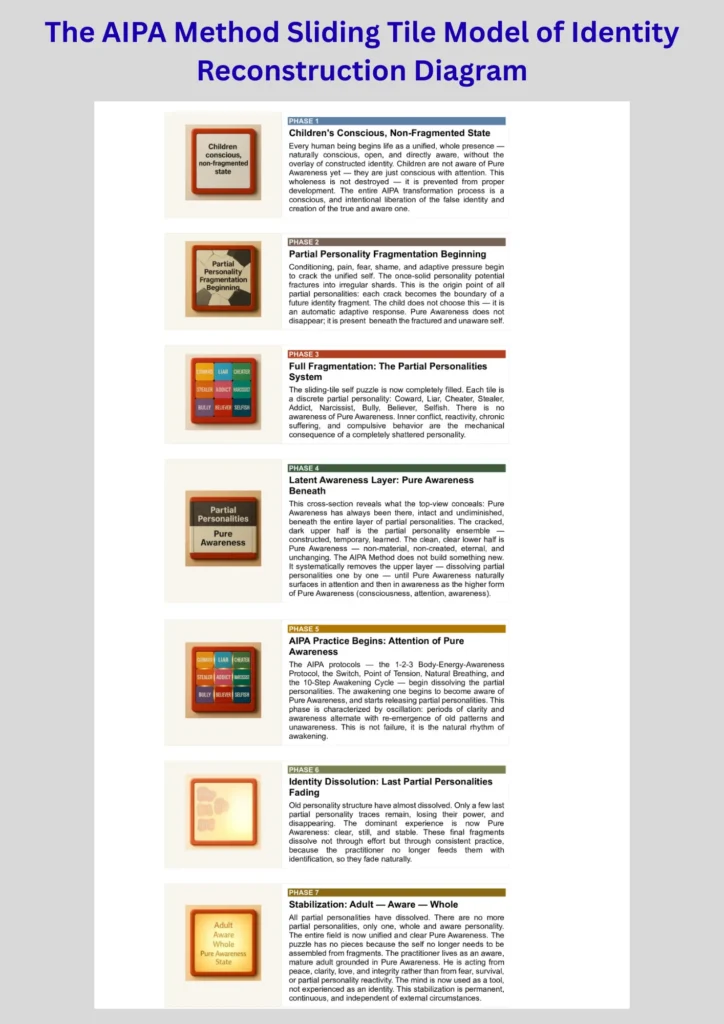
How the AIPA Method Works – Official Diagram of the Cognitive‑Phenomenological Model