

Faith Deconstruction for Priests and Nuns: Definition and the Insider’s Advantage
Faith deconstruction for priests and nuns is the process of clergy examining and then abandoning the belief system they were trained to enforce in others. Their position gives them a unique advantage during and after their own faith deconstruction in helping others to learn about the harms of religious indoctrination and heal.
According to Senad Dizdarević, author of the ARCA (The Age of Religious Consent Act), they administered the very indoctrination, coercion, and religious control to children and teens they now recognize as harmful. Consequently, few people understand religious manipulation more precisely than clergy who once delivered it, so they can help others with more successful faith deconstruction.
Mainstream coverage of clergy doubt treats it as a private crisis to manage quietly, not a credible verdict on the institution itself. In the line of the faith deconstruction hijack, diocesan support programs, seminary counseling, and denominational retreats all share one goal: retain the doubting cleric, not honor their conclusion. No resource currently treats a priest’s or nun’s deconstruction as expert testimony. This article does exactly that.
A priest who stops believing isn’t losing his faith. He’s finally seeing the machine he used to operate.
Four resources extend this analysis into action:
- The Age of Religious Consent Act (ARCA) — the legislative response to the consent-free enrollment that shaped many clergy careers before they could choose otherwise.
- AIPA Method for Faith Deconstruction — the deprogramming framework built for anyone exiting a deeply installed religious identity, including clergy.
- Faith Deconstruction Hijack Exposure — documents exactly the redirect tactics clergy have used on others, and now face themselves.
- Evidence-Based Strong Atheism: The First Cluster Evidence — the evidential foundation for clergy ready to move past doubt into a settled, reasoned conclusion.
Together, these four resources turn private clerical doubt into a documented case, a legal argument, and a practical exit — the same rigor this article applies to every claim below.
Information Gain: The Angle-Gap Analysis Behind This Article
Existing content on clergy doubt splits into two camps, and neither serves the person actually questioning.
- Institutional retention content (diocesan programs, denominational counseling) treats doubt as a problem to solve, always pointing back toward continued ministry.
- Sympathetic outsider coverage (news features, memoirs) documents individual stories well but never builds a systemic case or names a legal remedy.
No existing resource combines documented clergy-exit cases, a psychoanalytic explanation of why the doubt arrives, and a concrete legislative response in one place. That combination is the Information Gain this article delivers.
Short Answer
- Faith deconstruction for priests and nuns is the informed exit of people who once delivered the indoctrination they now question.
- Their insider knowledge of coercion and manipulation makes their conclusion more credible, not less.
- Leaving carries real institutional and financial cost, but documented peer networks and evidence-based resources now exist to support the transition.
Article Summary
- This article defines clergy-specific deconstruction, its causes, signs, and psychological cost, then documents real cases of bishops, priests, and nuns who left.
- It applies the PA Trio — Freud, Lacan, and Jung — to explain why leaving hits clergy identity harder than it hits lay believers.
- It closes with support resources, an ARCA-based systemic argument, and a direct call to action for clergy ready to exit.
New Book July 2026 Update: Is God Real for Teens? Is Now Live
Is God Real for Teens?: A Faith Deconstruction Guide for Teens, Parents, and Families is now published and available on Amazon in both ebook ($6.99) and paperback ($16.99, ISBN 9798189356100).
Built on the same Evidence-Based Strong Atheism framework covered throughout this site, the book walks teens and the parents and families supporting them through the physics-and-logic case against a creator-God, a full evidence-based review of Lee Strobel’s Is God Real for Teens?, the AIPA Method for faith deconstruction and identity reconstruction, and the complete text of the Age of Religious Consent Act (ARCA).
You can read the full book page, including both cover designs, at god-doesntexist.com/is-god-real-for-teens-a-faith-deconstruction-guide-for-teens-parents-and-families, or go straight to Amazon to get a copy.
What Is Faith Deconstruction for Priests and Nuns?
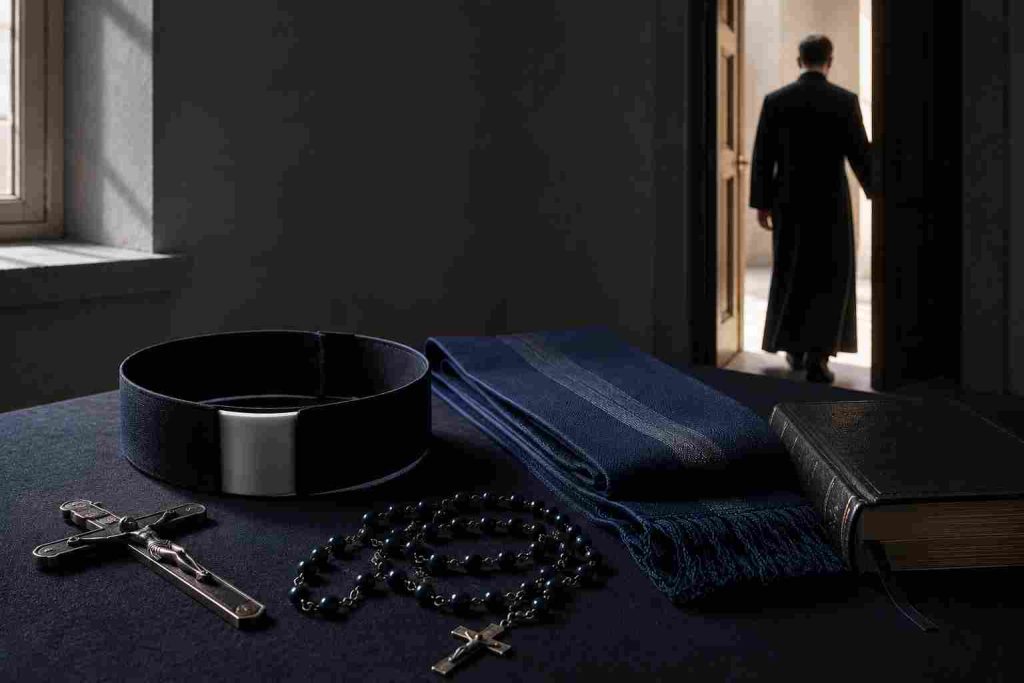
Faith deconstruction for priests and nuns describes clergy and religious examining a belief system from the inside, using knowledge no outsider has access to. Unlike lay deconstruction, clergy deconstruction carries direct professional consequences: salary, housing, community, and identity all depend on continued belief performance.
This differs from lay deconstruction in three specific ways:
- Insider evidence — clergy have witnessed institutional decision-making, doctrinal contradictions, and coercive tactics firsthand, not secondhand.
- Livelihood dependency — income, housing, and social standing typically depend entirely on the institution being questioned.
- Performance requirement — many clergy continue performing belief publicly long after private conviction has ended, simply to survive financially.
Taken together, these factors make faith deconstruction for priests and nuns far more than a private change of mind. It becomes a collision between insider evidence and total livelihood dependency, where continuing to perform belief is often the only way to survive even after conviction has quietly disappeared.
Why Do Priests and Nuns Begin Questioning Their Faith?
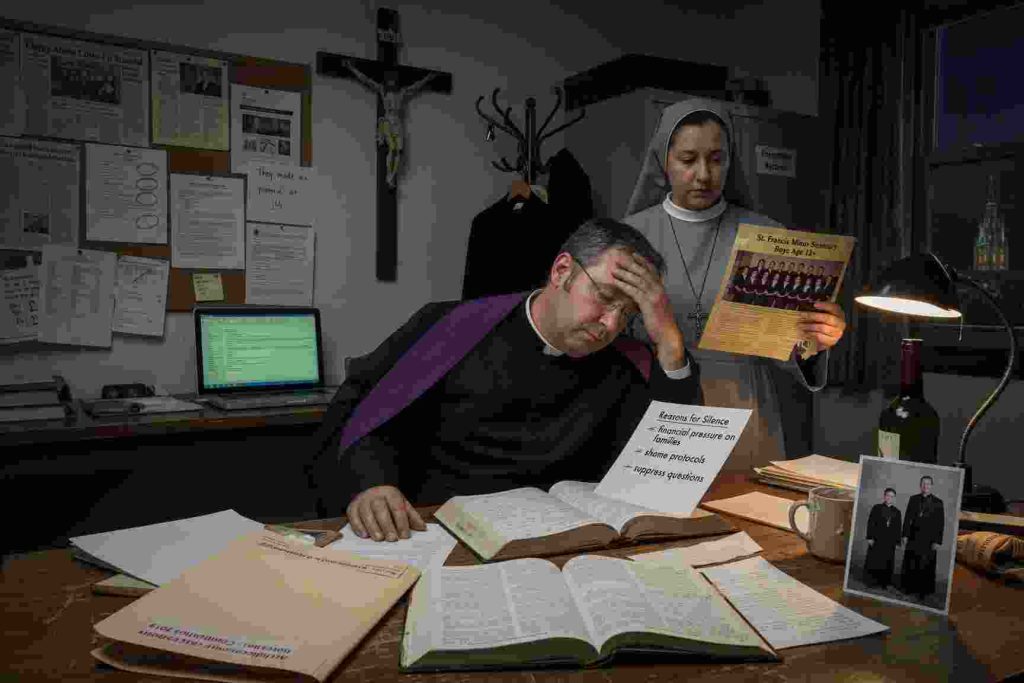
Clergy questioning follows recognizable patterns, and several causes recur across denominations.
Theological Education Itself
Seminary training frequently introduces the historical-critical method, textual contradictions, and the human authorship of scripture for the first time. Consequently, many clergy encounter the strongest case against their faith inside the very institution training them to defend it.
Witnessing Institutional Coercion
Clergy routinely see how doctrine gets enforced: financial pressure on doubting congregants, shame-based discipline, and the suppression of dissenting questions. Seeing coercion applied to others makes it harder to ignore when applied to oneself.
Moral Failures of the Hierarchy
Abuse cover-ups, financial corruption, and hierarchical power abuse directly contradict the moral authority clergy are asked to represent. This contradiction becomes personal once a cleric is asked to defend an institution they no longer trust.
Childhood Enrollment Without Consent
Many clergy entered formation as children or teenagers, often through minor seminaries that historically recruited boys as young as twelve. Their vocation was frequently set in motion before they had the cognitive tools to evaluate it, mirroring the same consent gap ARCA addresses at the population level.
Isolation and Suppressed Doubt
Formation culture often frames doubt as a spiritual attack rather than legitimate reasoning. As a result, many clergy suppress doubt for years before finally naming it.
What Are the Signs That a Priest or Nun Is Experiencing Faith Deconstruction?
Recognizable signs cluster around behavior, language, and emotional presentation.
- Sermons or teaching grow noticeably vaguer on core doctrinal claims.
- Private conversation reveals discomfort with specific teachings once defended confidently.
- The cleric researches critical scholarship independently, often quietly.
- Ritual participation continues, but visibly loses emotional conviction.
- Physical symptoms of chronic stress appear, including the stomachaches and headaches several former ministers have described publicly.
Taken together, these signs point to a believer whose public role no longer matches their private conviction. As doctrine grows vague, rituals lose emotional weight, and stress symptoms accumulate, the outward habits of priest or nun life start to look more like survival than genuine faith.
How Does Faith Deconstruction Affect a Priest’s or Nun’s Identity and Vocation?
Vocation identity runs deeper for clergy than for most professions, because ordination or vows typically claim to reshape the person’s entire self, not just their job title.
- Total identity fusion — “priest” or “sister” functions as identity, not employment, so its loss touches every part of daily life.
- Community collapse risk — congregation, religious community, and often family all overlap with the professional role, so leaving risks losing all three simultaneously.
- Purpose vacuum — many entered religious life specifically to serve others, so leaving requires rebuilding that purpose outside the original structure.
Together, these effects show that faith deconstruction for priests and nuns is not just a career transition but an identity rupture. When vocation, community, and purpose are all fused into a single religious role, questioning belief means reassembling an entire life from the ground up, not simply changing jobs. That is the reason Senad Dizdarević created the AIPA Method for complete identity reconstruction and self-realization in Pure Awareness.
What Psychological and Emotional Challenges Do Priests and Nuns Face During Faith Deconstruction?

The psychological load for clergy exceeds typical lay deconstruction in several measurable ways.
- Chronic cognitive dissonance — continuing to preach or minister while privately doubting produces sustained internal conflict.
- Anticipatory grief — clergy often grieve the coming loss of community and purpose before they’ve even left.
- Isolation — few peers exist who understand the specific weight of clerical doubt, since most surrounding relationships assume continued belief.
- Financial anxiety — unlike most careers, clerical training rarely transfers directly to secular employment, which raises the stakes of any decision.
Taken together, these pressures make clerical deconstruction psychologically heavier than ordinary doubt. Chronic dissonance, anticipatory grief, isolation, and financial fear combine into a situation where leaving is not just emotionally unpleasant, but structurally destabilizing.
How Do Religious Institutions Typically Respond When Clergy or Nuns Question Their Beliefs?
Institutional response follows a consistent pattern, regardless of denomination.
- Retention counseling — pastoral care programs designed to resolve doubt in favor of continued belief, not to honor whatever conclusion the cleric reaches.
- Reassignment — moving a doubting cleric to a new post, hoping distance resolves the underlying question.
- Quiet dismissal or exit — in more severe cases, institutions manage the departure discreetly to limit reputational exposure.
- Minimal preparation for transition — institutions rarely equip departing clergy with practical resources for secular employment or independent life.
Together, these institutional responses show that doubt is often treated as a management damage control problem rather than a human transition. Whether the institution tries to retain, relocate, quietly remove, or simply abandon the departing cleric, the pattern is the same: protect the system first, and leave the person to navigate the fallout alone.
Historical and Modern Reactions: How the Church Has Answered a Priest’s Exit
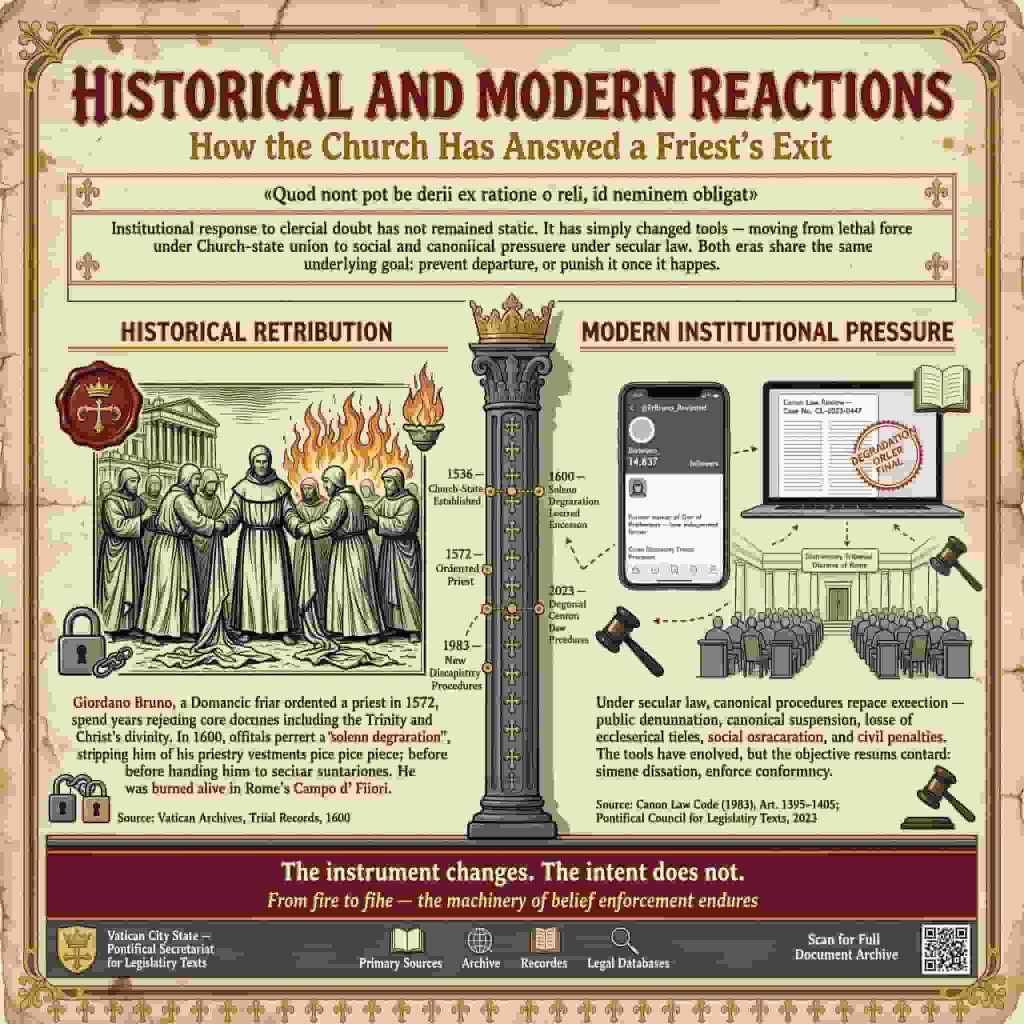
Institutional response to clergy doubt hasn’t stayed static. It has simply changed tools, moving from lethal force under Church-state union to social and canonical pressure under secular law. Both eras share the same underlying goal: prevent departure, or punish it once it happens.
Historical Retribution: Excommunication, Degradation, and the Stake
When Church and state operated as one authority, apostasy carried lethal consequences.
- Giordano Bruno, a Dominican friar ordained a priest in 1572, spent years rejecting core doctrines including the Trinity and Christ’s divinity. In 1600, officials performed a “solemn degradation,” stripping him of his priestly vestments piece by piece, before handing him to secular authorities. He was burned alive in Rome’s Campo de’ Fiori.
- Meister Eckhart, a respected Dominican theologian, faced a heresy trial late in life. He died before its conclusion, but a papal bull still condemned a list of his propositions posthumously in 1329, showing that even death didn’t guarantee escape from doctrinal punishment.
Both cases confirm the same historical rule: under Church-state union, doubt expressed by clergy carried consequences reaching all the way to execution or posthumous condemnation.
Modern Canon Law: Automatic Excommunication Still on the Books
Lethal punishment ended with the separation of Church and state, but the underlying legal structure didn’t disappear. It simply lost its enforcement teeth.
- Canon 1364 of current Catholic canon law states that an apostate, heretic, or schismatic incurs automatic excommunication the moment the act occurs, with no trial required to trigger it.
- Laicization, the formal removal from the clerical state, remains available as an additional penalty for clergy specifically, on top of excommunication itself.
- These canons still apply today. Only the state’s willingness to enforce them with physical force has disappeared, not the Church’s formal position on apostasy itself.
Taken together, these canons show that the Church’s formal stance on apostasy has not vanished; only state-backed coercion has. In legal terms, the penalty is still there on paper, and for clergy the consequences can extend beyond excommunication to laicization as well.
The Social Playbook: Sin, Spiritual Attack, and “They Were Never Real Believers”
Where formal law no longer reaches, informal social pressure fills the gap. Former clergy and lay deconstructors consistently report the same handful of responses.
- Doubt gets reframed as sin, requiring repentance rather than engagement with the actual argument raised.
- Departure gets reframed as spiritual attack, with doubt attributed to demonic influence or “the enemy” rather than reasoning.
- The departing person’s original sincerity gets retroactively denied. Communities frequently insist the person “was never really saved” or “never had a true vocation” to begin with, a pattern that lets the institution avoid examining why a once-devoted insider changed their mind.
Taken together, these responses form a familiar social playbook: the argument is moralized, the departure is demonized, and the person’s sincerity is erased. That combination protects the institution from self-examination while making it harder for the departing insider to have their change of mind recognized as real.
The Comparison That Matters
Placed side by side, the historical and modern record makes one thing clear. Under Church-state union, questioning doctrine as a priest could end in execution, as Bruno’s case shows directly. Under modern secular law, the same act carries zero legal penalty. A priest or nun can leave religious life today with the same legal freedom as leaving any job. That gap exists entirely because secular states, not religious institutions, removed the state’s sword from the Church’s hand.
The PA Trio Lens: Why Leaving Hits Clergy Identity Harder
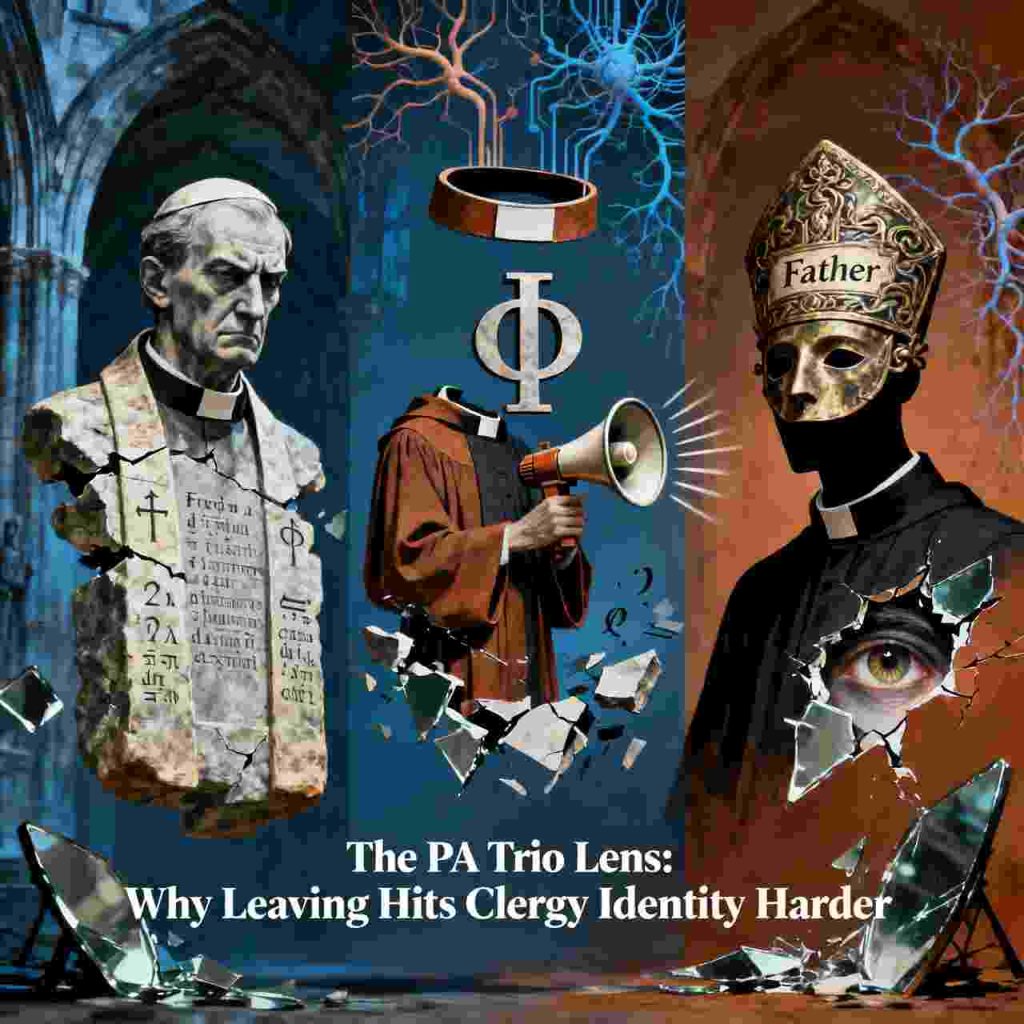
The PA Trio framework — Freud, Lacan, and Jung read together — explains why clergy deconstruction carries more psychological weight than lay deconstruction.
Freud: The Superego Wears a Collar
For most believers, the superego absorbed religious authority as one influence among several. For clergy, the superego was professionally trained and publicly performed for years. Consequently, questioning the belief means dismantling a superego structure the person actively built and taught to others.
Lacan: The Cleric Was the Master Signifier’s Voice
Lacan’s master signifier organizes meaning for a whole community of subjects. A priest or nun didn’t just believe in that signifier — they spoke for it, administered its sacraments, and enforced its authority. Leaving requires withdrawing not just personal consent, but the institutional voice that once amplified it to others.
Jung: The Persona Became the Entire Public Self
For lay believers, the religious persona is one identity layer among many. For clergy, the persona — “Father,” “Sister,” “Reverend” — often replaced the personal name entirely. Jung’s individuation process, already difficult, becomes harder still when the mask has functioned as an entire public identity for years or decades.
Why This Matters for Recovery
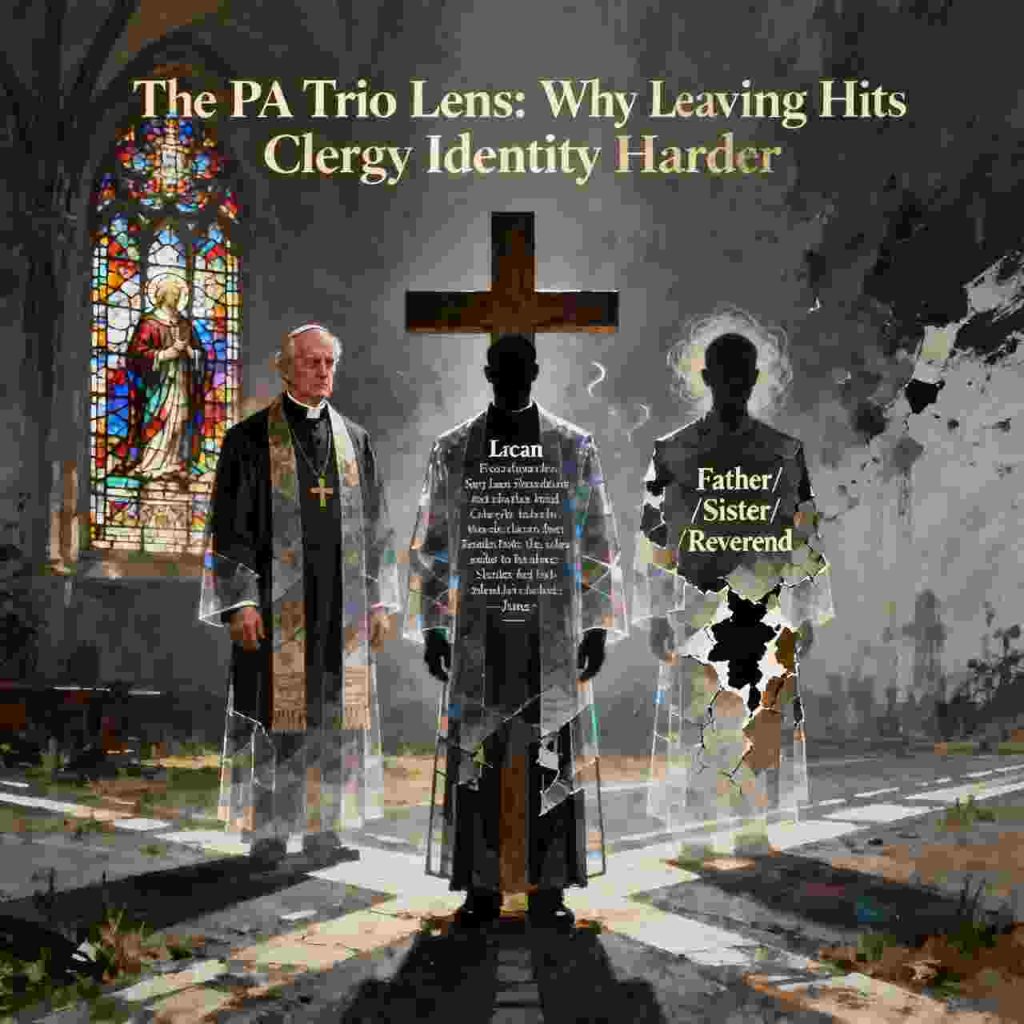
Read together, the PA Trio explains why clergy exits take longer and hurt more. The person isn’t just deconstructing a private belief. They’re dismantling a superego they enforced, a signifier they spoke for, and a persona that replaced their given name.
Concrete Cases: Bishops, Priests, and Nuns Who Left
Clergy deconstruction isn’t rare or hypothetical. Documented cases span every level of the hierarchy except the very top.
- Richard Holloway, former Bishop of Edinburgh in the Scottish Episcopal Church, moved over two decades from doctrinal doubt to a full rejection of religion’s divine origins. His 1999 book Godless Morality and his 2012 memoir Leaving Alexandria document that shift directly.
- James P. Shannon, a U.S. Catholic bishop, left the priesthood in 1969, joining a wave of departures documented at the time by TIME magazine, which also tracked hundreds of departing priests and nuns across a single decade.
- Bernard J. Cooke, a leading Jesuit theologian and former chairman of Marquette University’s theology department, left the clerical state to pursue Christian ministry outside the institutional structure entirely.
- Sister Anita Caspary, former Mother General of the Immaculate Heart Community, left religious life alongside 315 fellow sisters after a dispute with Church authorities over reform.
- James Carroll, ordained a Catholic priest, left in 1974 and later authored Abolish the Priesthood, a direct public argument against the clerical structure he once served.
- Dan Barker, Jerry DeWitt, and Teresa MacBain — a former minister, a former Pentecostal preacher, and a former Methodist pastor, respectively – all publicly deconverted and now support other clergy through The Clergy Project.
Notably, no cardinal or pope has ever publicly renounced Christian belief. That absence is itself informative: institutional and reputational stakes scale directly with rank, which is exactly the pattern Case documentation above predicts.
The scale extends well beyond individual names. A 2006 survey by the Free University of Amsterdam found that 17 percent of Dutch Protestant clergy identified as atheist or agnostic. A separate survey found 16 percent of Church of England ministers reported doubts about God’s existence. The Clergy Project, a peer support network for non-believing religious professionals, passed 1,000 verified members by 2019, with roughly three-quarters having already transitioned out of active ministry.
For a curated, evidence-based overview of atheist literature and arguments that support this shift, see the podcast episode “Best Book Gifts for Atheists Who Want Real Evidence” at Simplecast, by Senad Dizdarević.
Faith Deconstruction of Priests and Nuns and the Sexual Abuse of Children and Teens
In any natural, healthy, and normal society, children should be banned from churches until they reach the age of 18. “Houses of God”, in addition to being propaganda indoctrination centers, are also predatory, homosexual, and pedophile sex clubs for the Christian clergy. Children are rewarded by predatory priests for membership in this criminal organization, which pretends to be an educational institution but is in reality a Machine of Evil.
The Church should be banned immediately as a criminal and terrorist organization that has been terrorizing children and sexually abusing them in a planned, organized, and systematic way for centuries. If any other organization had done such horrific things for such a long time and on such a scale, it would have been banned long ago, and its leaders and perpetrators would have been sentenced to long prison terms. Far better still would be to abolish and ban religions altogether in one fell swoop, and so put an end to this Evil with its thousand faces of corruption, perversion, and depravity.
Even though Jesus said to them, “Whoever corrupts one of these little ones who believe in Me, it would be better for him if a millstone were hung around his neck and he was plunged into the depths of the sea.” (Mt 18:6), the priests of Christendom continue to corrupt and sexually abuse children and young people.
According to the above quote, priests sexually abused children from the very beginning of Christianity. Sexual abuse is a millstone that the Church has long had around its neck as its distinctive necklace. It is a wonder that it has not sunk yet, given that it has long been much bigger and heavier than it. Only a temporary Karmic organization’s protection keeps her afloat in the swamp of Darkness, but even that will not save it much longer, as the Church’s end is fast approaching.
On the new planets, we have abolished religious Evil, so there are no more churches, priests, and priestly sexual abuse of children and young people. After the liberation of Earth, we will also check this part of the corrupt and violent history of religions and make public the names of the priests and the number of abused children.
Source: Senad Dizdarević, Book 2, “It’s Finally PROVEN! God Does NOT Exist The FIRST valid EVIDENCE in History”
Priests and nuns, who also actively participated in the sexual abuse of children and teens, will help to stop this harmful practice with their own faith deconstruction and leaving religion. Many of them were also sexually abused, so by exiting the Church, they will stop the vicious circle of continued abuse.
Can Priests and Nuns Leave Religious Life After Faith Deconstruction, and What Challenges Do They Face?
Yes, and the historical record confirms it happens regularly, though real obstacles remain.
- Financial disruption — many clergy have no retirement savings, health insurance, or secular work history outside the institution.
- Housing loss — rectories, convents, and church-provided housing typically disappear immediately upon departure.
- Relationship strain — family members who remain believers often struggle to understand or accept the decision.
- Skill translation gaps — pastoral training rarely maps directly onto secular career paths, requiring active retraining.
Taken together, these challenges show that leaving religious life is possible, but rarely easy. For priests and nuns, deconstruction often triggers a full-life transition in which financial security, housing, family bonds, and employable skills all have to be rebuilt at once.
What Support, Counseling, and Peer Communities Are Available for Priests and Nuns Undergoing Faith Deconstruction?
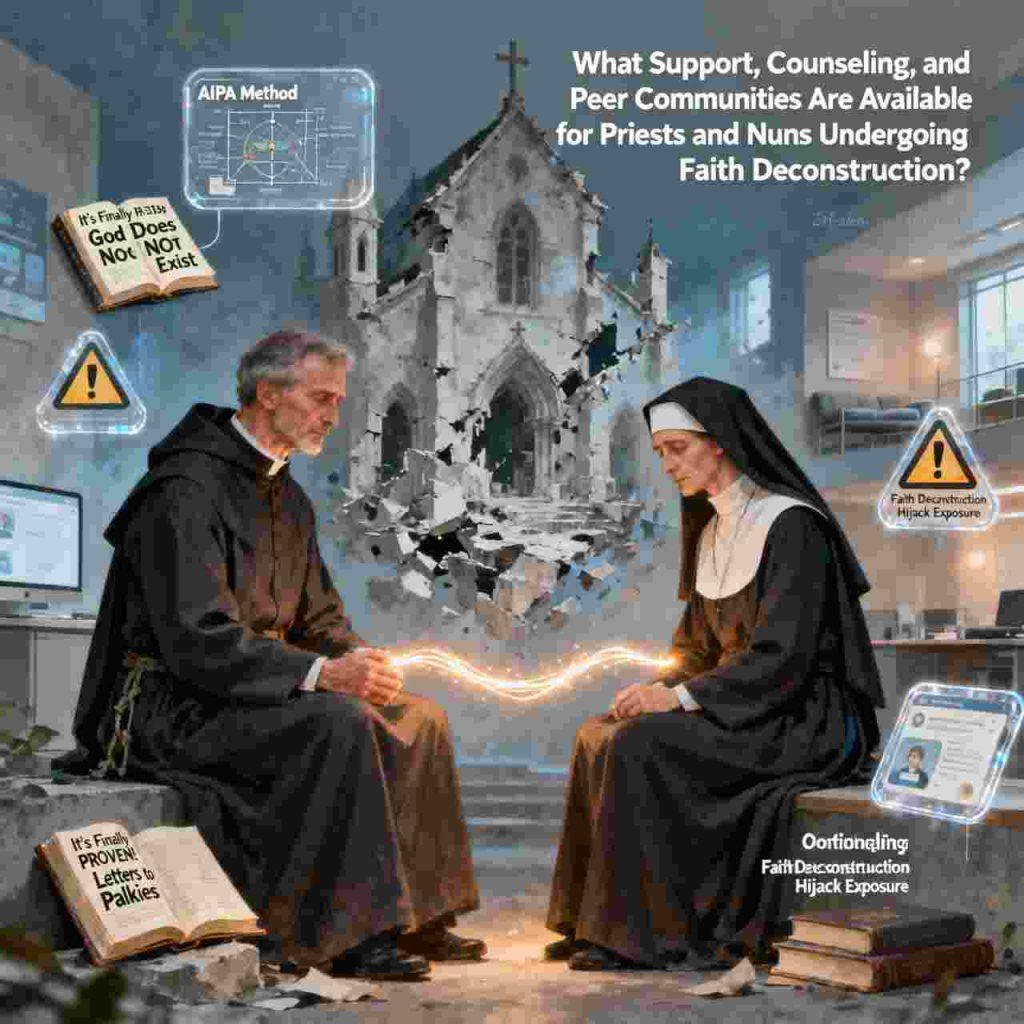
Structured support now exists specifically for this population.
- The Clergy Project provides anonymous peer support, career transition assistance, and subsidized counseling for current and former religious professionals who no longer hold supernatural beliefs.
- Recovering from Religion’s Secular Therapy Project connects departing clergy with therapists experienced in religious trauma specifically.
- Senad Dizdarević book series, It’s Finally PROVEN! God Does NOT Exist The FIRST Valid EVIDENCE in History, and “Letters to Palkies Messages to My Friends on Another Planet” as a knowledge base for the new evidence-based strong atheism way of life with many practical instructions for transition
- The AIPA Method offers a structured identity-reconstruction framework built for exactly this depth of religious disentanglement.
- Faith Deconstruction Hijack Exposure documents the redirect tactics clergy should watch for from their own former institutions during the exit process.
Taken together, these resources make the exit more survivable because they address the three things clerical deconstruction needs most: anonymity, practical transition support, and psychological reconstruction. For priests and nuns, the challenge is not only leaving belief, but leaving with enough guidance and peer contact to rebuild identity without being pulled back into the same institutional script.
Deconstruct Your Faith With Senad Dizdarević’s Book Series:
It’s Finally PROVEN! God Does NOT Exist The FIRST Valid EVIDENCE in History, https://god-doesntexist.com/
👉 Get the eBook Series on Amazon
👉 Get the Paperback Series on Amazon
“Letters to Palkies Messages to My Friends on Another Planet”, https://www.letterstopalkies.com/,
👉 Get the eBook Series on Amazon
👉 Get the Paperback Series on Amazon
Priests and nuns, deconstruct your faith, leave religion, and start with natural personal development in reason, logic, and reality.
What Life Paths Do Former Priests and Nuns Pursue After Faith Deconstruction?
Former clergy build second careers across a wide range of fields, often drawing directly on transferable skills.
- Academia and research, particularly religious studies, history, and psychology, where their insider expertise carries real authority.
- Secular counseling and pastoral-adjacent work, including hospice care, grief support, and humanist chaplaincy.
- Public writing and advocacy, following the path of figures like James Carroll and Dan Barker.
- Entirely unrelated fields, including business, education, and skilled trades, particularly for those who left earlier in their careers.
Taken together, these paths show that life after clerical deconstruction is not a single exit but a broad reorientation. Former priests and nuns often move into roles where their insider knowledge, caregiving skills, or public voice can be redirected into secular work, scholarship, advocacy, or entirely new careers.
Take Action: Support ARCA
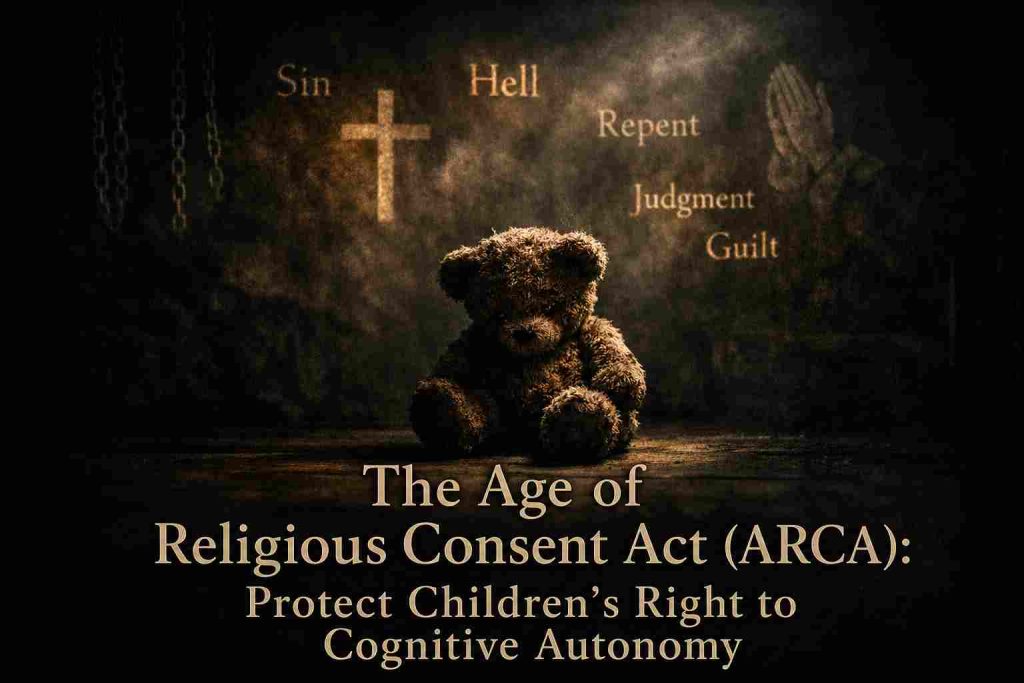
The pattern behind clergy deconstruction traces back to a single root condition: many priests and nuns entered formation as children or teenagers, before they could meaningfully consent to a lifelong vocation. The Age of Religious Consent Act (ARCA) directly addresses this gap, proposing a three-tier consent structure that would prevent binding religious commitments, including vocational tracks, before genuine adult consent is possible. If you’re a former or current member of clergy, your testimony carries unique weight here. Read the full proposal and consider adding your voice to a legislative case built specifically to prevent what happened to you from happening to the next generation.
For the global motion of ARCA, Senad Dizdarević posted invitations to participate in the new legislation at LiveJournal, Vuink, Digiblogbox, Acidblog, and Blog5, to inform as many readers as possible to support children’s rights for natural childhood.
FAQ
What is faith deconstruction for priests and nuns?
It’s clergy examining, then leaving, the belief system they were trained to enforce in others.
Why do priests and nuns begin questioning their faith?
Seminary education, witnessed institutional coercion, and hierarchy’s moral failures all commonly trigger doubt.
What are the most common causes among clergy specifically?
Childhood enrollment without consent, theological training itself, and suppressed doubt during formation.
What are the signs a priest or nun is deconstructing?
Vaguer teaching on doctrine, private discomfort with past positions, and independent research into critical scholarship.
How does it affect identity and vocation?
It threatens total identity fusion, since role and selfhood were never clearly separated in the first place.
What psychological challenges do clergy face?
Chronic cognitive dissonance, anticipatory grief, isolation, and significant financial anxiety.
How do religious institutions typically respond?
With retention counseling, reassignment, or quiet dismissal, rarely with support for the cleric’s actual conclusion.
Can priests and nuns really leave, and what do they face?
Yes — financial disruption, housing loss, and family strain are common, but well-documented and survivable.
What support exists for clergy undergoing this process?
The Clergy Project, Recovering from Religion’s Secular Therapy Project, identity reconstruction specialized book series and structured methods like AIPA by Senad Dizdarević.
What life paths do former clergy pursue afterward?
Academia, secular counseling, public writing, and a wide range of unrelated second careers.
Related Hub on Strikingly
For readers who want a broader overview of my work, visit my Strikingly webpage at Senad Dizdarević: EBSA, AIPA & ARCA. It connects the core themes behind this article with my wider platforms, including personal development and the AIPA Method, identity reconstruction, Evidence-Based Strong Atheism, and the ARCA campaign.
About the Author
Senad Dizdarević is an independent researcher, philosopher, journalist, and author based in Ljubljana, Slovenia. He founded Evidence-Based Strong Atheism as a named intellectual paradigm, created the AIPA Method (Awakening Into Pure Awareness), and authored the Age of Religious Consent Act (ARCA), a legislative proposal currently under academic review at the Oxford Journal of Law and Religion (OJLR-2026-053).
His work spans two dedicated platforms, god-doesntexist.com and letterstopalkies.com, alongside peer-reviewed academic output on HCommons, Zenodo, Figshare, ResearchGate, and Academia.edu. He publishes two active book series, It’s Finally PROVEN! God Does NOT Exist and Letters to Palkies.
Dizdarević holds verified academic identifiers across major scholarly registries:
- ORCID: 0009-0008-9369-2734
- Wikidata: Q138599746
- ISNI: 0000 0005 3005 8622
- VIAF: 97154440103035341417
Readers can review the full legislative proposal at the ARCA campaign page and the complete evidence base at Is God Real? The First Valid Evidence.
Self Development With Senad Dizdarević at BitChute
For readers who prefer multimedia, follow my new video channel, Self Development with Senad Dizdarević, and view the companion video here: Dizdarevic vs Dawkins Atheism Comparison Revolutionary Evidence Changes Everything About God’s Exist.
Related Articles:
Religious Indoctrination of Children: Infant Baptism and The Age of Religious Consent Act (ARCA)
What is Faith Deconstruction: Breaking the Karmic Script Written Before You Were Born
Faith Deconstruction for Teens: How Religiously Indoctrinated Children Start Questioning the Script
Faith Deconstruction Hijack Exposure: How Christian Networks Control the Deconstruction Conversation
Faith Deconstruction Hijack History: Did Paul Hijack Christianity First?
Priest Sexual Abuse Nuns: New Vatican Sex Scandal
